
- Board games for seniors, Cognitive stimulation games, Games for the elderly
Tantrix – Strategy and Logic Game
28.00€ TTC
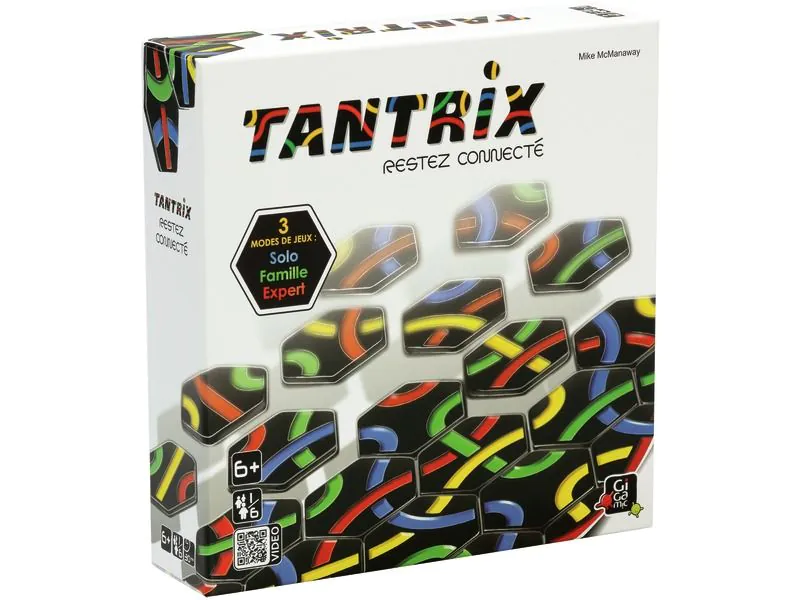
Tantrix is a captivating board game based on logic and strategy. Place colored tiles side by side while respecting color connections. Ideal for stimulating thinking skills!
In stock
In stock
Description
Tantrix – A Stimulating Strategy and Logic Game
Tantrix, a stimulating strategy game
Tantrix is a game that engages thinking and attention. Players take turns placing their tiles according to simple rules, but it requires real focus.
What truly changes for the player is the enjoyment of finding the right placement without being overwhelmed by complex instructions. The goal is clear: place all your tiles while respecting the color connections.
How to play Tantrix: rules and gameplay
The gameplay is smooth and intuitive. Each tile features colored lines on its edges. The action is simple and concrete: connect matching colors between adjacent tiles.
- Place one tile on your turn
- Ensure the colors match on adjacent edges
- Maintain continuous lines: no color should be broken
- The first player to place all their tiles wins
As the board fills up, options become more limited. During activity sessions, this naturally supports attention without slowing down the game.
Features and contents of Tantrix
The box includes:
- 56 numbered hexagonal tiles with colored patterns: offering varied gameplay and easy visual references
- Hexagonal shape: allows natural placement without orientation confusion
- High-contrast colored lines: easier visual reading, even as the board becomes crowded
- Compact format (20 × 20 × 5 cm): easy to set up on a standard table, even in small spaces
- Lightweight (0.5 kg): easy to carry, store, and move between rooms
- Designed for 2 to 4 players: encourages interaction without long waiting times
Benefits: logic, thinking, and social engagement
Tantrix stimulates logical reasoning at every turn. Players must observe, anticipate, and adapt their choices based on existing placements.
- Logical reasoning: each tile requires connecting visual constraints to decisions
- Concentration: attention is maintained to identify possible placements
- Working memory: keeping track of available options helps plan ahead
- Social interaction: exchanges naturally arise around choices and gameplay situations
- Accessible rules: quick to learn, especially suitable when autonomy is reduced but engagement is still desired
What families often notice first is the quality of attention around the table. The challenge is present but remains clear and progressive, without becoming frustrating.
Additional information
| Weight | 0.5 kg |
|---|---|
| Dimensions | 20 × 20 × 5 cm |
Related products
-

Flowers for Knitting
5.50€ TTC Add to cartAdd to WishlistFavoritesAdd to Wishlist -

Playing Cards XXL
10.80€ TTC Add to cartAdd to WishlistFavoritesAdd to Wishlist -
Table with Balls (a large model)
1,839.00€ TTC Add to cartAdd to WishlistFavoritesAdd to Wishlist -
Game with Balls
123.50€ TTC Add to cartAdd to WishlistFavoritesAdd to Wishlist