
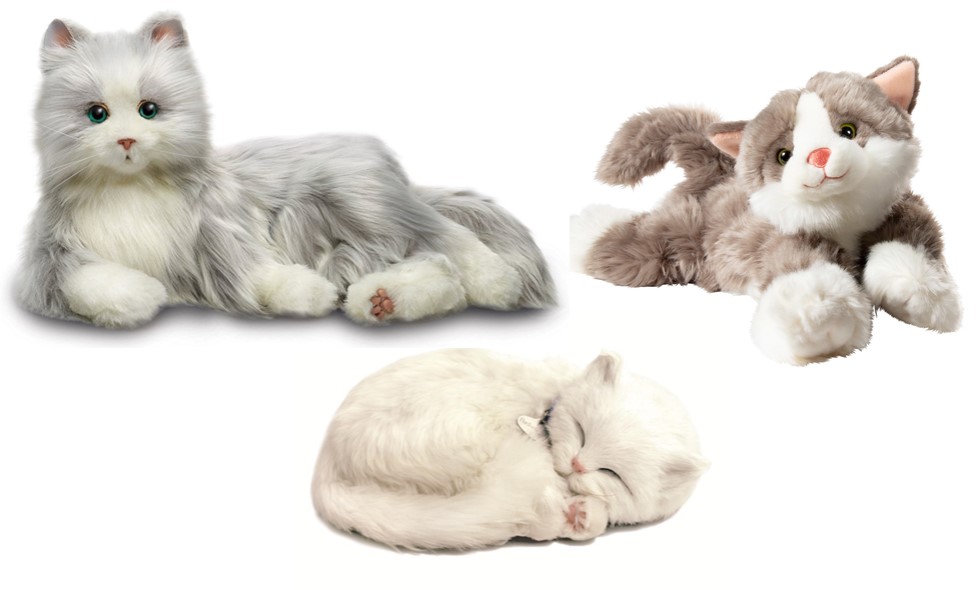
Robot Cat, Plush Cat, Breathing Kitten, Weighted Cat or Real Cat – Complete Guide for Nursing Homes and Home Care
In nursing homes, Alzheimer’s units and home care settings, the presence of an animal is often a powerful source of comfort and emotional reassurance.
However, adopting a real live cat is not always possible.
That is why therapeutic cats (interactive robot cats, weighted plush cats, breathing kittens, etc.) are increasingly used as non-pharmacological intervention tools (NPIs).
So, which option should you choose?
Here is a clear comparison to help you select the most suitable model for older adults, your residents, your organization and your therapeutic goals.
1. A Real Live Cat: Natural Presence… but with Constraints
Benefits
A live cat can:
-
Create authentic emotional bonds
-
Stimulate communication
-
Encourage memories and emotional recall
-
Provide warmth and spontaneous interaction
Animal-assisted therapy is widely recognized for its positive effects in gerontology.
Limitations in Nursing Homes
However, in care facilities or Alzheimer’s units, several constraints must be considered:
-
Possible allergies
-
Risk of scratches
-
Hygiene management
-
Legal responsibility
-
Veterinary care requirements
-
Unpredictable behavior
Not all residents are able or willing to interact with a live animal.
👉 This is where therapeutic cats become highly relevant.
2. The Robot Cat – Realistic Interaction Without Constraints

The Joy for All robot cat is the most interactive option.
It responds to touch:
-
Purrs
-
Meows
-
Blinks
-
Turns its head
-
Moves its paws
Ideal for:
-
Stimulating communication
-
Encouraging group interaction
-
Triggering emotional memory
-
Energizing Alzheimer’s units
Advantages
✔ Highly realistic
✔ Immediate interaction
✔ No feeding or veterinary care
✔ Easy surface disinfection
Limitations
– Higher cost
– May be too stimulating for very anxious individuals
Price: approx. €186
This is the most immersive option.
3. The Breathing Kitten – Gentle, Continuous Presence
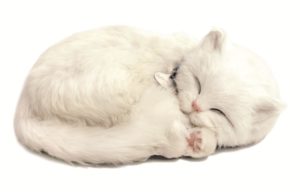
The breathing kitten replicates a natural breathing motion, with its belly gently rising and falling.
It is non-interactive and has no on/off switch.
Ideal for:
-
Anxious individuals
-
Noise-sensitive residents
-
Night-time reassurance
-
Residents with advanced loss of autonomy
Advantages
✔ Constant presence
✔ No handling required
✔ Immediate calming effect
✔ Affordable
Limitations
– No interaction
– Softer stimulation
Price: approx. €59
It recreates a feeling of presence without overstimulation.
4. Billy the Cat – Customizable Empathy Plush
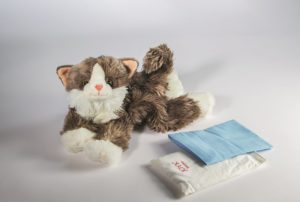
Billy the Cat is a soft and comforting empathy plush.
Its special feature: a hidden pocket that allows you to add:
-
A small weighted pouch
-
A customizable sensory insert (rice, cherry pits, warming elements, etc.)
Ideal for:
-
Targeted non-pharmacological interventions
-
Sensory workshops
-
Residents who need to cuddle
-
Individuals benefiting from light deep-pressure input
Advantages
✔ Customizable
✔ Adaptable to individual needs
✔ Modular sensory approach
✔ Budget-friendly
Limitations
– Requires manual adjustment
– Less visually realistic than a robot cat
Price: approx. €49
It is the most adaptable model.
5. The Weighted Cat – Ready-to-Use Deep Pressure Comfort
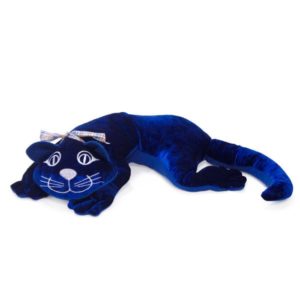
The therapeutic weighted cat includes evenly distributed integrated weight.
It provides gentle pressure that promotes calming through proprioceptive stimulation.
Ideal for:
-
Anxiety disorders
-
Agitation
-
Need for containment and grounding
-
Residents seeking reassuring physical contact
Advantages
✔ Immediate calming effect
✔ No adjustment needed
✔ Simple non-pharmacological tool
✔ Strong sense of security
Limitations
– Non-interactive
– Weight not adjustable
It is the perfect balance between simplicity and sensory effectiveness.
Therapeutic Cat Comparison for Nursing Homes
| Model | Interaction | Containment Effect | Stimulation Level | Constraints | Ideal For | Cost |
|---|---|---|---|---|---|---|
| Real Cat | Very high | Natural | Unpredictable | Care + hygiene | Equipped facilities | Variable (food, vet, insurance…) |
| Robot Cat | High | ❌ | Dynamic | Surface cleaning | Workshops, stimulation | 💰💰💰 (~€190) + batteries |
| Breathing Kitten | Low | ❌ | Gentle | Surface cleaning | Night care, anxiety | 💰 (~€60) + batteries |
| Billy the Cat | Low | ✔ Adjustable | Customizable | Machine washable | Targeted NPIs | 💰 (~€50) |
| Weighted Cat | Low | ✔ Integrated | Calming | Surface cleaning | Anxiety, agitation | 💰💰 (€50–100) |
How to Make the Right Choice
Choose a real cat if:
-
Your facility can manage long-term care
-
You have a structured animal-assisted therapy program
Choose the robot cat if:
-
You want active interaction and engagement
-
You run group activities
Choose the breathing kitten if:
-
The person is fragile or highly anxious
-
You need constant reassuring presence
Choose Billy the Cat if:
-
You want adaptable sensory stimulation
-
You implement personalized non-pharmacological interventions
Choose the weighted cat if:
-
The resident needs grounding and containment
-
You are looking for a simple, immediate calming effect
FAQ – Therapeutic Cats in Nursing Homes
Do therapeutic cats replace live animals?
No, but they reproduce some of the emotional benefits without logistical and hygiene constraints.
Are they suitable for people with Alzheimer’s disease?
Yes. They are widely used in Alzheimer’s units, PASA and specialized care units to reduce anxiety and encourage emotional connection.
Can they be integrated into non-pharmacological intervention programs?
Absolutely. Weighted and customizable models are particularly relevant in this context.
Which model is the most realistic?
The robot cat is the most interactive.
The breathing kitten is the most discreet.
Weighted models primarily provide sensory benefits.
Conclusion
The choice depends not only on the product itself, but on:
-
The profile of the older adult
-
The level of agitation or anxiety
-
The activity program
-
The organization of your facility
Therapeutic cats now represent a structured, gentle and credible alternative to traditional animal-assisted therapy in senior care settings.